Understanding disc herniation pain and options to avoid surgery
Being told you have a disc herniation or a prolapsed disc can feel worrying, particularly if symptoms include pain, tingling, numbness, or weakness.
These symptoms often raise concerns about nerve damage or the possibility of surgery. At the Devon Disc Centre, we help people understand what a disc herniation actually means, why symptoms occur, and what alternative options may be appropriate before considering invasive intervention.
Disc herniation symptoms rarely develop from a single cause. Lifestyle factors such as prolonged sitting, repetitive movement, occupational loading, stress, and reduced recovery often contribute over time.
Herniated Disc
What is a Disc Herniation
A disc herniation (some times referred to as a prolapse) occurs when part of a spinal disc extends beyond its usual boundary. This may reduce space around nearby nerve tissue and contribute to symptoms of pain, weakness or tingling.
Spinal discs sit between the vertebrae and act as cushions that absorb load and allow movement. Over time, or occasionally following strain or injury, a portion of the disc may protrude or herniate. Find out more >>
This does not automatically mean severe damage. Many people with a disc herniation improve over time with alternative care.
Common symptoms associated with a disc herniation
Some people experience no symptoms at all. Others may experience
some of these common symptoms:
-
Arm pain
-
Tingling or numbness
-
Weakness in the arm or leg
-
Pain that worsens with sitting or bending
Symptoms often fluctuate and may improve over time.
Why disc herniations cause symptoms
Symptoms usually occur when disc material affects nearby nerve tissue. However, not all herniations cause symptoms.
Pain and symptoms may also be influenced by:
-
Nerve sensitivity
-
Muscle guarding
-
Reduced movement
-
Nervous system responses
This is why imaging findings do not always match symptom severity.

Herniated Disc vs Bulging Disc vs Slipped Disc
These terms are often used interchangeably but describe slightly different disc changes:
-
Herniated disc — a more focal protrusion of disc material
-
Bulging disc — the disc extends outward more evenly
-
Slipped disc — a general term for disc shape changes
All three represent variations of disc change rather than separate conditions. Symptoms depend on whether nearby tissue or nerve structures are affected.

Where is your Disc Herniation
Discs herniation can occur in different regions of the spine.
Lumbar disc herniation
A lumbar disc herniation occurs in the lower back and may contribute to:
-
Lower back pain
-
Sciatica
-
Leg pain or heaviness
-
Tingling or numbness in the leg or foot
-
Weakness in the leg
Symptoms often change with posture and movement.
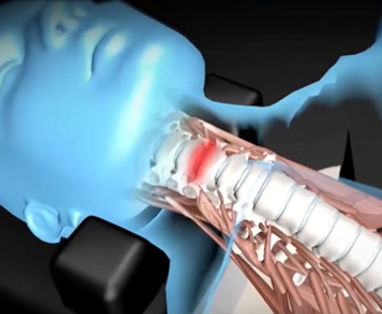
Cervical disc herniation
A cervical disc herniation occurs in the neck and may contribute to:
-
Neck pain
-
Shoulder pain
-
Arm pain
-
Tingling in the hand or fingers
-
Weakness in the arm or hand
Symptoms may fluctuate and do not always match scan findings precisely. A thorough suitability assessment allows us to identify the source of your symptoms, determine whether spinal compression is a contributing factor, assess the neurological involvement, identify any red flags or contraindications, and decide whether decompression is an appropriate care option.
Can a Disc Herniation Improve Over Time
In many cases, yes. Disc herniations often improve over time as:
-
Inflammation settles
-
Compression reduces
-
Movement improves
-
Nervous system responses calm
Alternative care focuses on supporting this process. While the disc shape may not completely reverse, symptoms often improve significantly as pressure on the nerve reduces.
Carefully controlled decompression creates the best environment for healing a disc.


Non-surgical spinal decompression is designed to gently reduce pressure within the spine and support disc recovery.
In appropriate cases, decompression may:
-
Reduce pressure on the disc
-
Improve disc hydration and healing
-
Create space around irritated nerve tissue
-
Improve comfort during movement and sitting
-
Support a calmer neurological response
At the Devon Disc Centre, decompression is delivered using biofeedback monitored technology, allowing care to be instantly adjusted in real-time based on how the body responds during each session.
How Spinal Decompression Can Help
Frequently Asked Questions